
Open-water swimming in Czech rivers, reservoirs, and sand-pit lakes is regulated under Act No. 258/2000 Coll. on public health protection. The Czech National Institute of Public Health (SZÚ) and regional public health authorities monitor 48 designated bathing locations throughout the summer season, publishing water quality assessments weekly. This article documents monitoring methodology, notable bathing locations, and the primary health risks associated with freshwater swimming in the Czech Republic.
Monitoring Framework
Czech water quality monitoring at designated bathing areas follows EU Directive 2006/7/EC (Bathing Water Directive). Each designated location is assessed at least four times per season between June 1 and August 31. Parameters tested include:
- Intestinal enterococci (threshold: 200 CFU/100 ml for "excellent" quality)
- Escherichia coli (threshold: 500 CFU/100 ml for "excellent" quality)
- Cyanobacteria concentration (cells/ml, with intervention threshold at 20,000 cells/ml)
- Transparency (Secchi disc depth; below 1 m triggers review)
Results are published on the SZÚ portal and updated every Friday during the season. Local municipality websites for major bathing areas typically reproduce the data within 24 hours of publication.
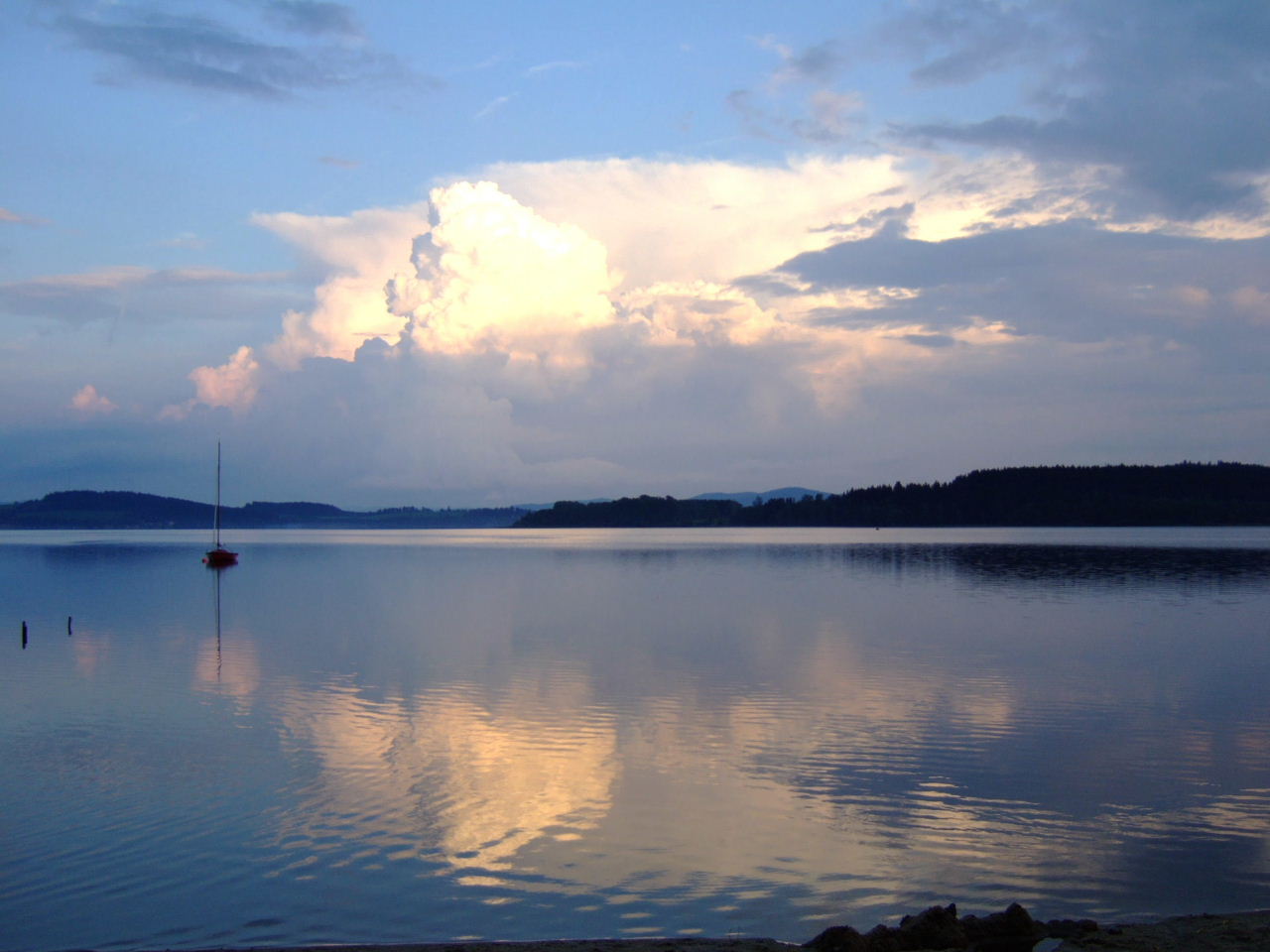
Principal Bathing Locations
Mácha Lake (Máchovo jezero) — Liberec Region
Mácha Lake is the most visited freshwater bathing destination in the Czech Republic, receiving an estimated 800,000 visitors per season. The 284 ha lake is located near Doksy in the Liberec Region, approximately 80 km north of Prague. Water temperature typically reaches 22–25°C by mid-July. Lifeguard coverage operates on the main Staré Splaviště beach from 10:00 to 18:00, June through August.
Blue-green algae (cyanobacteria) events at Mácha Lake have been documented in warm dry summers — most recently in August 2022 and July 2024, when partial bans were issued for the central beach zone. The municipality posts current status at Doksy.cz. Satellite monitoring of the lake is conducted weekly during June–August by the Czech Hydrometeorological Institute.
Rozkoš Reservoir — Hradec Králové Region
Rozkoš maintains one of the most consistent water quality records among Czech designated bathing areas, achieving "excellent" or "good" classification in 14 of the past 16 seasons. The shallow eastern basin warms quickly and the sandy bottom does not suspend sediment easily. The main bathing zone occupies a 400 m stretch of the eastern shore, supervised from June 1 to August 31.
Bolevecká Nádrž — Plzeň
This municipal reservoir on the northern edge of Plzeň is the primary bathing facility for the city. It is managed by the Plzeň city administration and holds a permanent designation under Act No. 258/2000 Coll. Testing at this location runs twice per week during the main season. The reservoir's small catchment and controlled inflow contribute to consistent results; E. coli counts above 200 CFU/100 ml have been recorded only once in the past decade, following heavy rainfall in June 2021.
Orlík Reservoir — Central Bohemia
The designated bathing zone at Orlík is located on the western shore near the Orlík village. This section of the 91 km shoreline has been classified as "good" consistently since 2018. The depth drops to 15 m within 50 m of the shore, which provides thermal stratification — surface temperatures are warmer than at shallower lakes, but the cold deep layer can cause thermal shock if swimmers descend suddenly.
Blue-Green Algae: Identification and Risk
Cyanobacteria (blue-green algae) are the principal biological hazard in Czech freshwater swimming. Under warm, calm, nutrient-rich conditions, several species form surface blooms that can produce hepatotoxins (microcystin) and neurotoxins (anatoxin-a). Contact with bloom-affected water can cause skin irritation, eye inflammation, gastrointestinal symptoms, and in rare cases — with significant ingestion — liver damage.
Visual identification is unreliable. Blooms range from bright green to blue-green to olive brown and may appear as foam, paint, or aggregated flakes. A provisional rule used by Czech public health authorities: if the water resembles pea soup, the smell is musty or earthy, and surface scum aggregates on the downwind shore, the location should not be used for bathing regardless of posted status.
The Czech Environmental Information Agency (CENIA) publishes an interactive map of cyanobacteria-affected locations updated in near real-time using satellite data from the Copernicus programme. The map is available at cenia.cz.
Temperature Patterns by Region
Czech freshwater temperatures follow a clear latitudinal and altitudinal gradient:
- Bohemian lowlands (below 300 m a.s.l.): Lakes and sand pits typically reach 22–26°C by late July. Season: June 15 – September 10.
- Bohemian–Moravian Highlands (300–600 m): Peak temperatures of 18–22°C; short season: July 1 – August 20.
- Šumava and Krkonoše foothills (above 600 m): Summer maxima of 14–18°C. Cold water shock risk for non-acclimatised swimmers. No designated bathing zones above 700 m.
Safety Practices for Open-Water Swimming
- Enter water gradually to allow acclimatisation, particularly when temperature is below 18°C.
- Swim parallel to shore in a monitored area rather than directly out into open water.
- Identify exit points before entering unfamiliar water.
- Do not swim in rivers with active river traffic or in reservoir motorboat channels.
- Children under 14 should not swim without adult supervision.
- Avoid swimming during or immediately after heavy rain — surface runoff significantly degrades bacteriological quality within 24–48 hours.
- Wetsuits are advisable for water below 16°C; at 14°C cold incapacitation risk increases significantly.
Rescue Infrastructure
Czech Water Rescue (Vodní záchranná služba) operates patrol stations at 12 major bathing locations during the main season. The national emergency number is 155 (ambulance) and 158 (police). For water rescue in a location without a lifeguard, call 112 (European emergency number). The Czech Red Cross maintains a water safety information resource at cervenykriz.eu.
Key External References
- Czech National Institute of Public Health (SZÚ) — weekly bathing water quality reports
- Czech Environmental Information Agency (CENIA) — cyanobacteria satellite monitoring map
- Czech Hydrometeorological Institute (ČHMÚ) — weather and water temperature data


